

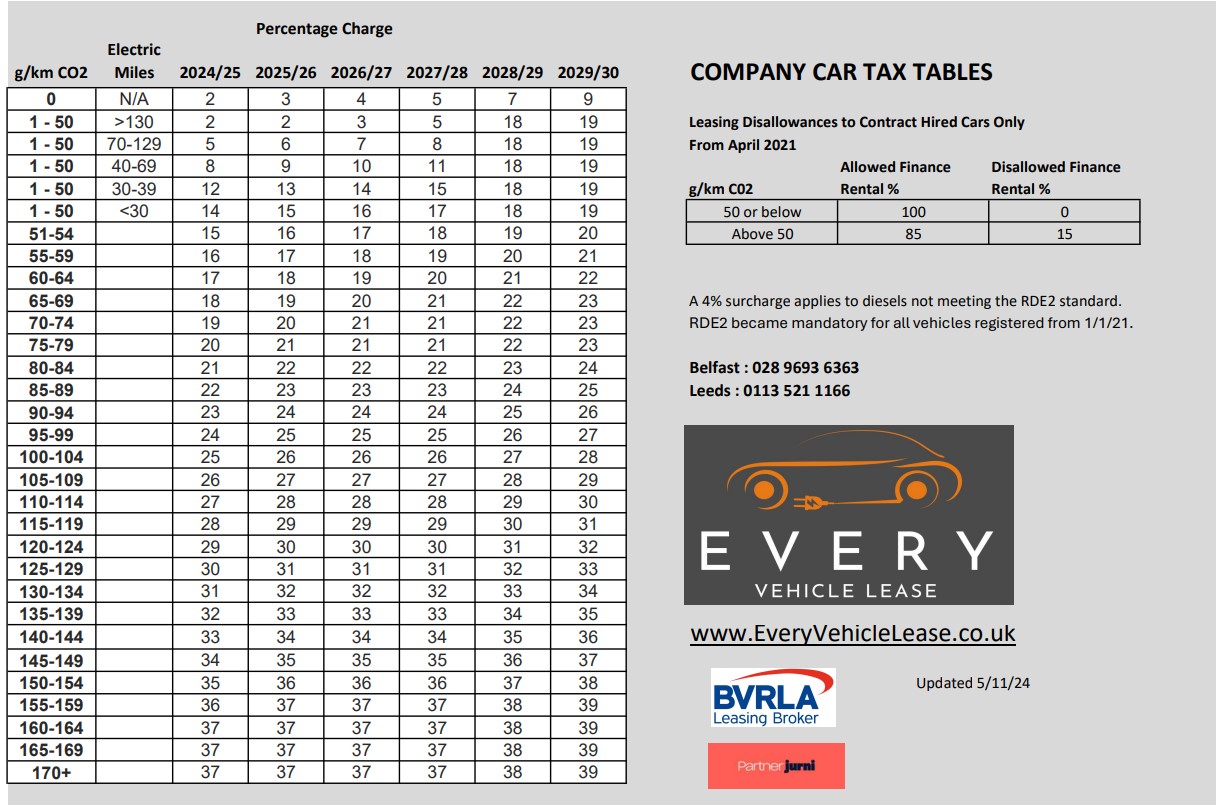
The above table shows the percentage of the P11D value for calculating the company car driver's benefit in kind for all cars registered after 6 April 2020.
For example if an employee had a car with a CO2 of 108g/km, and the P11D value of the car was £45,000, their benefit in kind for the 2023/24 tax year would be £11,700 (ie it is 26% of £45,000).
This amount of £11,700 is their benefit in kind and would go on their annual P11D sheet that is reported by their company to HMRC.
If they are a 20% tax payer their monthly company car tax would be £11,700 x 20% = £2340 (for the annual amount) then divided by 12 to get £195 per month company car tax due.
If they are a 40% tax payer it would be double this ie £390 per month.
To keep company car payments as low as possible it is more beneficial for employees to take a lower CO2 company car - diesel and petrol are usually all start above CO2 100g/km so these will be in the highest percentage tax brackets. Lower CO2 cars start with a plug in hybrid (the majority are below CO2 50g/km) for those that want to go part electric and part fossil fuel. They can achieve excellent MPG if charged daily or when the battery is almost at zero.
However, the lowest percentage would be from taking a full electric vehicle ie just 2% up until April 2025. Electric cars have CO2 0g/km as they have zero tail pipe emissions. In the above example if you had a £45,000 electric car, the employee's benefit in kind for the 2023/24 tax year would be £900 (ie it is 2% of £45,000). This £900 would be their calculated benefit in kind and would mean a 20% tax payer their monthly company car tax would be £900 x 20% = £180 (for the annual amount) then divided by 12 to get £15 per month company car tax due (if a 40% payer this would be doubled ie £30 per month company car tax).